When Milwaukee Brewers closer Trevor McGill got the Devil Rays' Richie Palacios to ground out to second baseman Brice Turang on Wednesday night, it not only clinched the first World Series in club history, but it also fired up a lot of long nights of hot-market production for U.S. manufacturers.
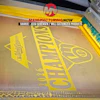
Since 1988, Will Customized Products has been making promotional items in Milwaukee, Wisconsin. When first baseman Jake Bauers recorded the final out, Will Products was in hot production, charged with making 12,456 World Series Champions shirts in a single overnight production window, some 360 shirts per hour.
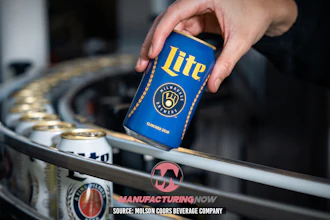
Watch: Miller Lite Brews Up ‘Clinch Cans’ to Honor Its Hometown’s World Series
But long before the final out is recorded and the team storms the field, a design process is coordinated well in advance of the final game. Will Products is just one piece of a puzzle that includes facilities across the country — and consistency is critical.
Jessi Sorensen, Art & Marketing Director of Will Customized Products, said, "The client provides us with production-ready artwork, along with a physical print sample that serves as our reference for ink colors, logo placement and overall print quality. This ensures that every shirt we produce meets the same standards as those being printed at other facilities nationwide."
Before full-scale production begins, Sorensen's team prints a sample shirt to verify color accuracy, artwork placement and overall quality. The team then submits a photograph of that sample to the client for final approval. Sorensen says this quality-control checkpoint is essential before thousands of shirts are made in just a matter of hours.
The Brewers organization supplies blank garments, delivered to the facility by UPS or freight truck. Upon arrival, Will's team carefully counts and verifies the inventory to make sure everything is ready for production. Ink colors are precisely matched to Pantone specifications through the company's ink supplier to maintain consistency across the entire production run.
With everything in place, once the winning team is determined, the operation can move immediately into production.
In high-volume screen printing, production rates can reach 450 shirts per hour per press. Maintaining that pace requires experienced operators, properly calibrated equipment and a highly coordinated production team. "Speed is essential," Sorensen said, "but we never lose sight of the importance of consistent print quality."
So, when do they start the presses? About 30 minutes before the game ends, two supervisors and two press operators arrive at the plant to prep the equipment. This includes bringing conveyor dryers and flash-curing units up to the proper operating temperatures so production can begin as soon as the championship outcome is confirmed.
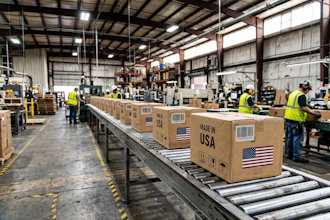
For this production run, Will Products used four M&R automatic screen-printing presses, including two 14-station machines and two 16-color machines. Hot off the press, the shirts travel through conveyor dryers, and each shirt receives a holographic authenticity sticker, applied by hand to the left side of the garment.
The shirts are then carefully counted, sorted and packed according to specific requirements.
Printing began immediately following the game, around 10:13 p.m., and by 8:00 am, all 12,456 shirts had been delivered.
To keep merchandise moving as quickly as possible, outbound pickups are scheduled in multiple waves beginning at 4:00 a.m. "It's an intense, time-sensitive operation where every minute counts," Sorensen said. "Our team works through the night to ensure championship merchandise is ready for distribution while excitement surrounding the victory is at its peak."
One unique risk of championship merchandise production is that these facilities must be fully prepared for a specific outcome, even though the final result isn't guaranteed. If the Brewers don't bring home a championship, they still cover the costs, all unused championship artwork is destroyed, and the blank garments are repacked and returned.
"It's a calculated part of the hot-market business," Sorensen said. "The key is having the people, equipment and processes ready to execute immediately when the outcome is confirmed, while also having a clear plan in place if production doesn't move forward."
And don't worry, even though some of the staff had to show up early to bring the machines online, they still got to see the end of the game, just from the office. Soon thereafter, the entire Will Products team showed up for a long night of hot production.