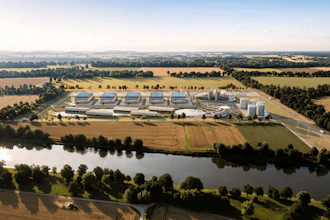
Editor's note: AES CEO Wendell Stinson issued a statement addressing Tennessee OSHA's citations and penalties.
An attorney preparing to file a federal lawsuit against a Tennessee explosives manufacturer over a deadly 2025 blast alleged this week that the company pushed its production beyond a safe level in an effort to fulfill a Pentagon contract.
Darren Richie, who represents the families of two of the 16 people killed in the October explosion at Accurate Energetic Systems, said during a Thursday news conference that AES neglected safety hazards to increase production for the $120 million federal contract, the Tennessean reported. He indicated the families intend to file their lawsuit this month and will seek $150 million in damages.
Top manufacturing news:
- Slate Auto Raises $650M to Make $25,000 Trucks
- Podcast: Car Paint Gets Security Detail; Tyson Loses Bacteria Case; Stronger Ban on Chinese Cars
- Buyers Fret as Average New Car Cost Nears $50,000
- Wind Turbine Maker Sued After Catastrophic Collapse, Terminated Contracts
The statement came about a week after Tennessee's OSHA (TOSHA) department concluded a six-month investigation into the explosion and cited AES with 100 violations totaling over $3.1 million in penalties. The cited hazards included explosive dust buildup on equipment and workers spraying flammable paint near hot equipment without proper safeguards. The agency said the penalty is the largest in its history.
The AES explosion occurred on October 10, 2025. According to a U.S. Chemical Safety Board (CSB) investigation, the company was manufacturing commercial explosive products called cast boosters for industrial blasting applications on the day of the incident.
Production in Building 602 at the AES site involved a “melt-pour” process, during which workers melt explosive materials in steam-jacketed kettles and mix the materials with agitators. They then pour the mixture by hand into cardboard or plastic tubes.
In a complaint shared by Nashville television station WSMV4, Richie cited a document from the TOSHA investigation stating that 53 days before the explosion, a kettle in Building 602 boiled over with molten explosive material. A production manager later emailed building supervisors with proposed maximum explosive quantities — three of four revised instructions receiving approval. The fourth, which outlined actual operating limits, reportedly remained in draft form.
A CSB investigator said the first detonation created a pressure wave that triggered additional explosives throughout the building. The agency’s report added that the blast was felt over 20 miles away, sent debris more than 700 feet and registered a 1.6 magnitude on the Richter scale. The CSB estimated roughly 23,000 pounds of explosive material detonated, deflagrated or burned.
The cause of the explosion remains under investigation.
In a statement sent to IEN, CEO Wendell Stinson said, “We believe that TOSHA’s findings do not represent the standard of safety we strive to achieve every day, nor our commitment to the wellbeing of our team members and their loved ones.”
Stinson added that the company continues to investigate the incident and cooperate with government authorities. He declined to comment on the pending litigation.
Click here to subscribe to IEN's daily newsletter for manufacturing news you won't read anywhere else.