Low earth orbit is a vast place, but that doesn’t mean it’s empty.
And as countries across the globe are increasingly using this space for connectivity and research, satellite populations are skyrocketing – and we may witness some close calls.
It was recently revealed that a SpaceX satellite nearly collided with another, unexpected satellite, the source of which is still not fully understood.
Most Popular on IEN:
- Anheuser-Busch Closes Breweries; VW's Unprecedented Closure; Ford Scraps F-150 EV: PODCAST
- Volkswagen Announces Unprecedented Plant Closure
- Anheuser-Busch to Close Three U.S. Breweries
- Ford Scraps Fully-Electric F-150 Lightning
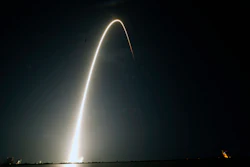
According to SpaceX VP of engineering Michael Nicholls, a SpaceX satellite encountered another satellite that had been launched sometime in the previous 48 hours from China’s CAS Space.
Nicholls said “no coordination or deconfliction with existing satellites operating in space was performed” by CAS Space and that the two spacecraft came within 200 meters of one another. As tech reporter Nicholas Werner pointed out, “in space terms, they basically high-fived.”
Unfortunately understanding the source of this satellite isn’t as simple as pointing to China. CAS Space reportedly launched orbitals from many countries on this mission, including China, Nepal, Egypt and the EU.
Nicholls claims the country behind this particular satellite didn’t share information about its trajectory – or even its presence.
Unfortunately, the current air traffic control system for outer space is a hodge podge. After the incident, experts bemoaned the lack of a truly international surveillance and tracking system that all countries participated in. And with the number of satellites being deployed increasing rapidly across the globe, Werner says a space craft crash is “getting likelier by the day.”
This carries the risk of adding space debris, which could damage other spacecraft or, worse, crash to earth.
And if all currently proposed satellite launches are successful, that would put more than half a million of them in low earth orbit, according to NASA.
Without a global tracking plan, this looks increasingly like a disaster waiting to happen.
Click here to subscribe to our daily newsletter featuring breaking manufacturing industry news.