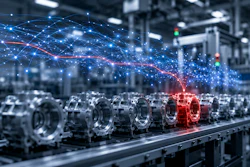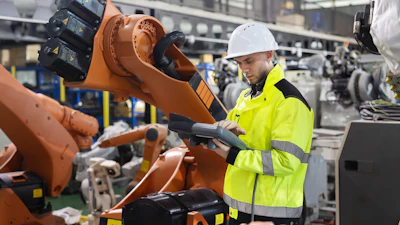
A bearing begins to vibrate differently. A pump draws slightly more power. A motor runs a few degrees hotter than normal. None of these changes shuts down the line today, but one could become tomorrow’s failure.
In the traditional equipment-management model, the plant may not act until the next inspection, an operator notices a problem or the machine stops. Then begins a familiar sequence: diagnose the failure, locate a technician, find the right part and absorb the downtime.
That sequence is being redesigned.
Sensors, connected equipment, artificial intelligence, remote diagnostics and additive manufacturing are moving critical capabilities closer to the asset and the moment they are needed. This is part of a larger shift I call proximity: the production and provision of value moving closer to actual demand.
For industrial leaders, proximity is not simply about faster maintenance. It is about building systems that recognize and respond to needs before disruption occurs. Companies that do this well will not just manage equipment more efficiently. They will play a different game.
From Scheduled Maintenance to Actual Condition
Most maintenance programs still depend heavily on one of two triggers: the calendar or a failure. Preventive maintenance reduces breakdowns, but it can also create inefficiencies. Components may be replaced too early, while problems developing between inspections can go undetected.
Connected equipment offers a third model. Sensors can continuously monitor vibration, temperature, pressure, energy use, fluid condition and other indicators. Analytics can compare that information with the machine’s history, operating environment and the performance of similar assets.
The goal is not to collect more data. It is to identify when action becomes valuable.
This moves maintenance closer to the equipment’s actual condition. A team can intervene before failure without wasting remaining component life. Over time, the system can learn which signals matter, which interventions work and how operating conditions affect performance.
The result is more than predictive maintenance. It is a real-time learning system built around uptime, safety and productivity.
Bring Expertise to the Machine
When specialized equipment fails, the right expert may be in another building, state or country. Traditionally, restoring the asset meant bringing that expert to the machine.
Digital tools increasingly reverse the equation.
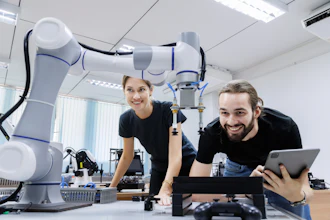
Remote monitoring can give an OEM, dealer or specialist access to the equipment’s operating data. Video, augmented reality and connected work instructions can help an on-site technician diagnose or repair equipment with expert guidance.
Digital twins add another layer, allowing teams to model the asset, test potential interventions and investigate problems without first disrupting the physical operation. AI can then surface relevant manuals, service histories and likely causes while the work is underway.
This does not eliminate skilled technicians. It extends their reach. Specialists can support more sites, while less-experienced technicians gain access to knowledge at the point of work.
Plant leaders should ask: How much of the expertise required to maintain this asset must be physically present and how much can be made instantly available?
Rethink the Spare-Parts Model
Industrial operations often hold large spare-parts inventories because the cost of not having the right component can be enormous. Yet many parts sit for years, become obsolete or belong to equipment no longer manufactured.
Additive manufacturing creates another option. Instead of storing every physical part, companies can maintain qualified digital designs and produce selected components when and where demand arises.
Automakers already use additive manufacturing for replacement parts, including components for discontinued models. The U.S. Navy has equipped ships with 3D printers capable of producing parts at sea. These examples point toward a model in which raw materials, secure design files and distributed production capacity replace some physical inventories.
Not every component should be printed locally. Safety-critical parts require rigorous material standards, process controls, testing and certification. High-volume parts may remain more economical to manufacture centrally. The near-term opportunity is a hybrid system: stock frequently used components while creating on-demand options for low-volume, long-lead-time or obsolete parts.
The easiest demand to predict is demand that already exists. Producing more parts after the need becomes clear can reduce working capital, storage costs and downtime.
Move From Equipment to Outcomes
As equipment becomes connected and service becomes more responsive, the business model can change as well.
An OEM that can continuously monitor an asset, anticipate failures, guide repairs and provide parts on demand is no longer selling only a machine and service contract. It can begin selling availability, output, energy efficiency or another measurable outcome.
This raises expectations across the ecosystem. Manufacturers, distributors, service providers and plant teams will need to share information more effectively. Cybersecurity, data ownership and interoperability become operational concerns, not merely IT issues. Purchasing decisions may increasingly consider the strength of an equipment provider’s digital and service ecosystem alongside the machine’s specifications.
The transition will not happen all at once. Plants have legacy assets, mixed control systems, workforce constraints and equipment that may remain in service for decades. The practical path is to begin where the cost of failure is high, the data is accessible and the value can be measured.
Choose one critical asset or equipment class. Identify the signals that could reveal an emerging need. Determine who must receive that information and what action should follow. Then ask what else can move closer to the moment of need: expertise, instructions, parts, decisions or production capacity.

Kaihan Krippendorff is the bestselling author of Proximity and founder of Outthinker Networks, a global peer network of strategy, innovation and transformation executives.
A Wharton senior fellow and former McKinsey consultant, he has been recognized by Thinkers50 and Global Gurus as a leading management thinker. He has worked with or presented to organizations including Lockheed Martin, United Technologies, Oshkosh, Daikin and the Association of Equipment Manufacturers.