The regulatory landscape for industrial dust control is tightening across multiple fronts. In December 2024, the National Fire Protection Association (NFPA) consolidated six separate combustible dust standards into a single, unified framework, NFPA 660, with stricter requirements for dust hazard analysis, equipment design, and explosion protection.
This represents the most significant overhaul of combustible dust safety guidelines in over a decade, requiring facilities to revalidate their dust hazard analyses every five years and meet enhanced training and documentation standards.
Simultaneously, OSHA has intensified enforcement of silica and combustible dust exposure through its National Emphasis Program, with organizations such as the American Society of Heating, Refrigerating and Air-Conditioning Engineers (ASHRAE) and the Centers for Disease Control and Prevention (CDC) recommending MERV 13 or higher filter efficiency for indoor air quality protection.
In this environment, engineering controls such as source capture and proper filtration have become the recognized first line of defense against airborne particulates. Systems designed to meet previous standards may no longer satisfy current regulatory expectations, creating a gap between legacy equipment and evolving requirements.
This gap poses both compliance risks and operational vulnerabilities for facilities that have not evaluated their dust-collection infrastructure against current standards.
Source Capture: The First Line of Defense
Effective dust control begins at the source, capturing particulates before they disperse into the ambient environment. Industrial dust collectors, particularly cartridge-style systems, provide high-efficiency capture directly at the point of generation. These systems range from compact plug-and-play units handling 600 cubic feet per minute (CFM) for smaller operations to modular configurations capable of managing airflows up to 80,000 CFM for large-scale industrial applications.
For facilities handling combustible dust, NFPA-compliant collectors with integrated spark arrestor systems mitigate explosion and fire risks at the point of origin. Facility size and airflow requirements determine whether operations need single compact units or multiple large-scale collectors working in tandem across production areas.
Source capture reduces the burden on downstream HVAC filtration, extending filter life and improving overall air quality. Dust collectors and ambient air filtration systems work together as a layered defense. Collectors handle the heavy lifting at generation points while building HVAC filtration addresses residual particulates that escape primary capture. However, this layered approach only works when both systems are properly maintained and capable of meeting current performance standards.
 A RotoClone W dust extraction system from AAF International at an industrial facility.AAF International
Why Outdated Systems Fail Modern Facilities
Older dust collection and filtration systems often operate at reduced efficiency, allowing harmful particulates to circulate unchecked throughout the facility. Product contamination, surface fouling on precision components, and compromised quality control persist when airborne dust is not adequately captured.
Equipment wear accelerates when dust infiltrates machinery, leading to equipment failure, unexpected downtime, and repair expenses that far exceed the cost of proper filtration upgrades. Poor dust control also increases energy consumption as HVAC systems work harder to compensate for inadequate source capture and clogged filters.
Worker exposure to respirable hazards increases when collection and filtration systems underperform, creating both health risks and regulatory liability for silica, metal fumes, and welding particulates.
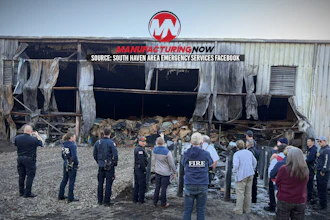
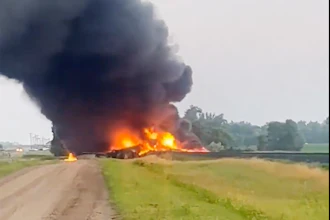
The July 2025 explosion at Horizon Biofuels in Nebraska, linked to combustible wood dust accumulation and housekeeping failures, killed three people. The U.S. Chemical Safety Board called it "a well-known and completely avoidable hazard." Facilities may also face regulatory penalties and enforcement actions if systems fail to meet current standards.
Maintenance Scheduling
Most industrial dust collectors require regular inspection of cartridges, spark arrestors, and collection bins, based on dust load and combustibility risk. Filtration systems typically require servicing every three to six months, depending on facility type, dust load, and production process.
Regular inspections catch problems before they become costly failures. Filter replacement frequency varies but typically ranges from six to twelve months for standard operations. High-dust environments may require quarterly replacements to maintain capture efficiency and regulatory compliance.
Proactive maintenance extends system life and ensures facilities remain aligned with evolving regulations. Documenting inspection schedules and replacement intervals also supports compliance verification during audits and helps demonstrate due diligence under NFPA 660 requirements.
Filter Specifications and Selection Criteria
Selecting the right filtration requires careful evaluation of multiple factors. Dust type and particle size vary across regions of the country and manufacturing processes, and each facility demands specific filter ratings to achieve adequate capture efficiency.
Minimum Efficiency Reporting Values (MERV) ratings provide a standardized measure for comparing filter performance. For industrial applications that handle fine particulates, filters rated MERV 11 or higher are common, with MERV 15 nanofiber media available for environments requiring superior particle retention and dust release control.
Airflow requirements matter as well. Filters must accommodate the volume of air processed without causing excessive pressure drop that strains equipment or reduces system effectiveness. Operating environment conditions, including temperature, humidity, and chemical exposure, affect filter material selection and durability.
Compatibility with existing equipment prevents costly retrofitting. Filter media selection directly impacts collection efficiency, system longevity, and resistance to premature clogging.
Investing in the Right Filtration Strategy
A comprehensive approach to dust control combines source capture through industrial dust collectors with properly specified ambient air filtration, working as an integrated system. Proper system selection protects both worker health and bottom-line profitability while reducing regulatory exposure.
Facilities that align their dust collection and filtration systems with current regulations position themselves ahead of enforcement action. Regular maintenance and timely replacement keep systems operating at peak efficiency and compliance. Working with air quality experts ensures your facility has the right solution for your specific manufacturing needs and compliance obligations.
Proactive air quality testing by an expert partner can determine dust-holding capacity, contaminant types, and particulate size to help ensure product integrity and worker safety.
Facility managers should review OSHA's Combustible Dust National Emphasis Program as part of any compliance assessment. Directive CPL 03-00-008, the Revised Combustible Dust National Emphasis Program, outlines current enforcement priorities and expectations, and serves as a practical starting point for evaluating where your operation stands.
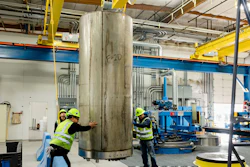
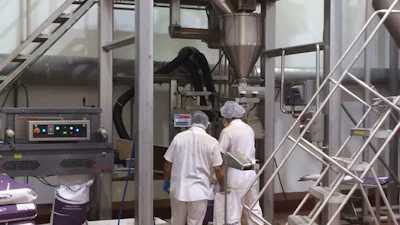
 A RotoClone W dust extraction system from AAF International being intalled at an industrial facility.AAF International