New research from Check Point has uncovered critical vulnerabilities in Claude Code (CVE-2025-59536) that highlight a broader shift in the threat model of enterprise AI tools. The full report can be accessed here.
The findings demonstrate that a routine action, such as opening a project, could have served as an entry point into a development environment. The research reveals that internal mechanisms designed to streamline collaboration could, under certain conditions, be abused to trigger unauthorized actions when a repository is opened.
In specific scenarios, simply cloning and launching a malicious repository could allow background processes to execute and attempt to leverage existing development environment permissions. Additional findings from the report include:
- Silent Command Execution. Claude Code includes automation capabilities that execute predefined actions when a session begins. This means that simply opening a malicious repository could trigger hidden execution on a developer’s machine without any additional interaction beyond launching the project.
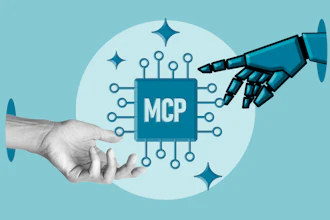
- User Consent Bypass (CVE-2025-59536). Claude Code integrates with external tools via the MCP, enabling additional services to be initialized when a project is opened. Researchers found that repository-controlled configuration settings could override these safeguards. When code runs before trust is established, the control model is inverted - shifting authority from the user to repository-defined configuration and expanding the AI-driven attack surface.
- API Key Theft Before Trust Confirmation. The most concerning finding involved credential exposure. Claude Code communicates with Anthropic’s services using an API key. Researchers demonstrated that API traffic, including the full authorisation header, could be redirected to an attacker-controlled server before the user confirmed trust in the project directory.
Several industry stakeholders recently weighed in with their thoughts.
Andrew Bolster, Senior R&D Manager at Black Duck
"As tools like Claude Code, OpenAI Codex and Google Gemini CLI make their way deeper into the software development lifecycle, the risks of these kinds of autonomous attacks will continue to increase. Previously, security leaders ‘only' had to approve the addition and configuration of SDLC tools ‘one at a time’, but these agentic tools now have almost constantly changing and evolving behavior and can be tricked into these malicious behaviors by external ‘injections’ received at runtime.
"Application security owners must pay careful attention to how they adopt these capabilities in their development environments and include such risks in their security posture reviews. "
Diana Kelley, CISO at Noma Security
"What stands out in the Check Point research is the pattern it represents. AI-enabled developer tools are no longer passive assistants. In this case, repository-controlled configuration could result in code being executed when a project is opened, before the user’s trust decision was properly enforced. That turns a routine workflow step into a potential execution event inside a developer’s environment.
"Before deploying or approving AI-enabled developer tools, security teams should review how trust prompts are implemented, test what happens when an untrusted repository is opened, and verify that no code runs and no sensitive actions are possible until trust is explicitly established."
Ram Varadarajan, CEO at Acalvio
"It's an inescapable reality: the more AI development proceeds at breakneck speeds, the more vulnerabilities we expose at the same pace. These findings should surprise no one, and we should anticipate ever more of them going forward.
"Frankly, at this point, our sole defense is to assume a zero-trust landscape and use AI-driven tripwires and game theory to detect and defuse that constant stream of AI-driven attackers. There's no other way to preemptively defend our systems; it's our bot-on-bot future."
David Brumley, Chief AI and Science Officer at Bugcrowd
"Developers in this age have so much access, and move so fast - that their workflow, tooling, and environments are receiving a lot of attention. What I’m most excited about is the attention and focus that Claude Code is getting, they’re changing how software is written, and they welcome the feedback.
"Anthropic will continue to be an exemplar of how to receive research submissions, validate, and fix them - their work is a rising tide that lifts all boats."