Technology is redrawing global automotive competition:
- Fifty-one percent of executives surveyed expect software and digital technology to become their company's primary source of competitive differentiation by 2035.
- Forty-nine percent of respondents describe their software-defined products and over-the-air capabilities as established or embedded.
- Only 36 percent of AI and software initiatives have successfully scaled beyond pilot.
- 92 percent of companies surveyed require at least 12 months to deploy a new AI, digital or software capability enterprise-wide.
- Fifty-seven percent of ASPAC respondents reported significant investment in AI and emerging technologies, compared with 52 percent in Europe and 48 percent in the Americas, as the region leads in autonomous-driving and ADAS integration.
China set to take center stage:
- Nearly half (48 percent) of the executives surveyed expect six of the world’s top 10 OEMs to be headquartered in China by 2035.
- The report associates future automotive value creation increasingly with software, batteries, intelligent electronics and AI-enabled services rather than traditional hardware alone.
Software and digital technology are set to become the defining source of automotive competition, while executives increasingly expect China to play a leading role in the industry's future, according to KPMG International’s 26th Global Automotive Executive Survey.
The research, based on responses from 775 senior automotive executives worldwide, finds that 51 percent of respondents expect software and digital technology to become their company’s primary source of competitive differentiation by 2035. Forty-eight percent also expect six of the world’s top 10 OEMs to be headquartered in China by then.
These expectations are forming against a backdrop of simultaneous disruption reshaping the industry’s competitive landscape. The findings suggest executives may be bracing for a decade of overlapping disruption, with technology, geopolitics, sustainability, operating pressures, customer expectations and business-model disruption converging at the same time and at similar levels of intensity.
The convergence of disruption is also turning transformation from a time-limited program into the industry’s baseline operating model, as fifty-two percent of respondents agree that continuous transformation is now the industry norm.
“Automotive leaders are managing several moving targets at the same time, from technology and geopolitics to changing customer expectations and business models. These forces increasingly interact and compete for the same capital and management attention. The companies that move fastest to translate technology into customer value, while retaining the flexibility to respond across markets, will be best placed to lead the next phase of the industry,” said Dr. Andreas Ries, global head of automotive at KPMG International.
Technology is redrawing automotive competition
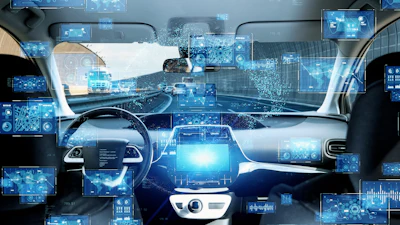
Competition is shifting towards AI, advanced driver-assistance systems, intelligent cockpits, software-defined vehicles and connected services. Fifty-one percent of respondents expect software and digital technology to become their primary source of competitive differentiation by 2035.
Forty-nine percent already describe their software-defined products and over-the-air capabilities as established or embedded, while 42 percent report the same maturity in their overall software-defined vehicle strategy.
Execution remains the critical gap. On average, only respondents shared that 36 percent of AI and software initiatives have scaled beyond pilot and been adopted across the organization. Ninety-two percent take at least 12 months to deploy a digital, software or AI capability enterprise-wide, including more than one-third that need over two years.
Regional capabilities are also developing at different speeds. Fifty-seven percent of ASPAC respondents report significant investment in AI and emerging technologies, compared with 52 percent in Europe and 48 percent in the Americas. ASPAC leads in autonomous driving and ADAS integration at 52 percent (Europe and the Americas are at 44 percent) and AI governance at 50 percent (Europe at 45 percent and the Americas at 39 percent).
But technology leadership is no longer determined by internal capabilities alone. As automotive software, AI and connected services evolve, companies increasingly recognize that future competitiveness will depend on the strength of their ecosystems as well as their technology investments. The share of value creation enabled by external partnerships and ecosystems is expected to rise from 30 percent today to 44 percent within three years. Trust is also becoming a key differentiator, with half of executives surveyed believing trust in digital and connected features will significantly influence which companies win or lose over the next three years.
China set to take center stage
The technology-led shift in value also helps frame executives’ expectations of a changing global competitive order. A growing share of respondents believe China will play an even more influential role in the global automotive landscape, with nearly half (48 percent) predicting that six of the top 10 OEMs will be headquartered there in 2035.
The report’s analysis points to China’s growing capabilities in electrification, software and digital innovation as the country becomes more influential in technology-led automotive value pools. The expectation of a stronger Chinese presence sits within a broader shift toward technology-led value creation across ASPAC.
The report also finds that value creation is expanding beyond the vehicle, with leading companies using their capabilities to pursue opportunities in areas including energy storage, defense applications, connected services and financial services.
“The industry’s competitive map is being redrawn. Technology is changing what customers value, how companies differentiate and where future profit pools may emerge. China’s growing influence is one of the clearest signals of that shift, but success will depend on more than geography or scale. It will depend on the ability to deploy technology, build the right ecosystems and adapt as markets diverge,” said Nicolas Nowicki, partner at KPMG France and EMA region head of automotive.